

Core Web Vitals & Speed Optimization: What Every Website Owner Must Know


In 2025, user expectations are higher than ever, and a slow-loading website is no longer just a minor inconvenience—it’s a dealbreaker.
Whether users are shopping online, booking a service, or consuming content, speed plays a pivotal role in their experience. A delay of even a few seconds can lead to lost traffic, lower conversions, and poor search rankings. Google’s algorithm continues to reward fast, user-centric websites, making performance optimization one of the most important aspects of modern web development.
Understanding Core Web Vitals in 2025
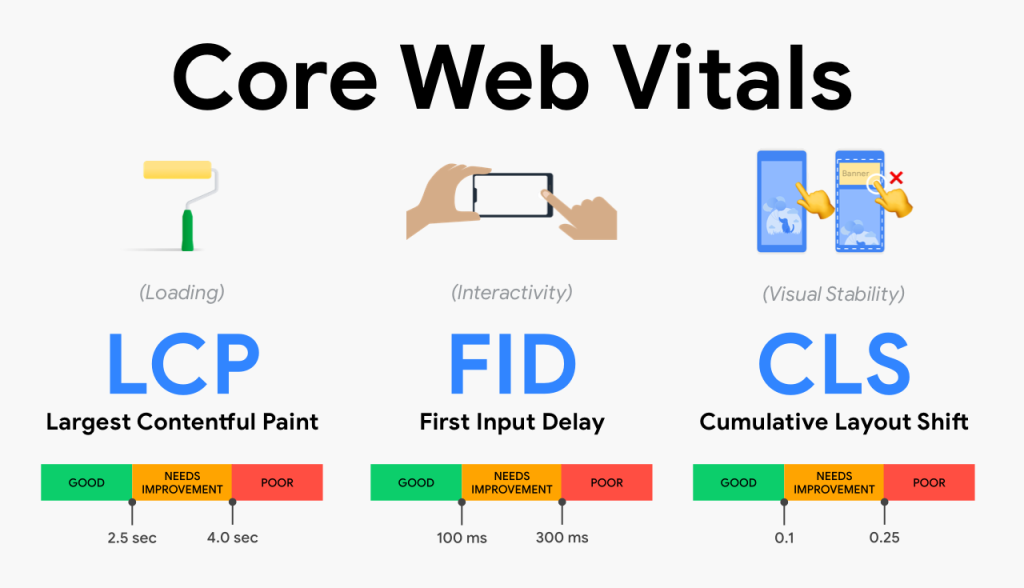
Core Web Vitals are the cornerstone of Google’s Page Experience signals. These metrics measure real-world experience and help determine how smoothly a website performs. In 2025, the primary Core Web Vitals include Largest Contentful Paint (LCP), Cumulative Layout Shift (CLS), and Interaction to Next Paint (INP), which recently replaced First Input Delay (FID).
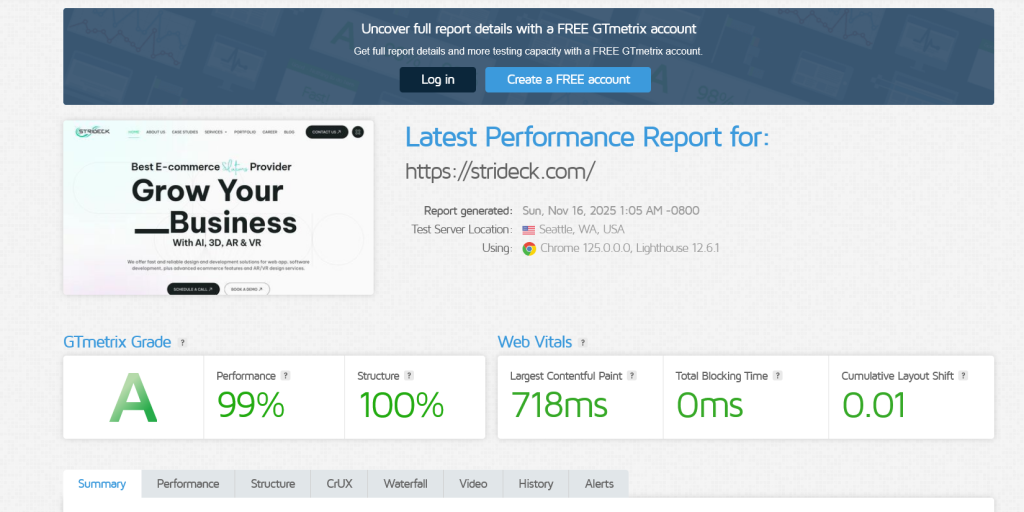
LCP evaluates how quickly the largest visible content on a page loads. Ideally, this should happen within 2.5 seconds to deliver a seamless first impression. CLS focuses on layout stability and ensures that content doesn’t shift unexpectedly during page load. A good CLS score should be under 0.1 to prevent frustrating user experiences. INP now measures how quickly a site responds after a user interacts with it, offering a more complete view of site responsiveness compared to the older FID metric. Keeping the INP below 200 milliseconds is considered optimal.
Speed and SEO: A Long-Term Relationship
Search engine optimization and website performance have become inseparable. Google’s algorithm prioritizes websites that not only offer valuable content but also load quickly and respond to user actions with minimal delay. Websites that meet Core Web Vitals thresholds are more likely to secure higher positions in search results, especially on mobile.
Additionally, search engines consider bounce rate and dwell time as indirect indicators of user satisfaction. If a site takes too long to load, users are more likely to abandon it. This sends a negative signal to search engines, affecting both visibility and authority. In contrast, optimized sites tend to keep users engaged longer, ultimately boosting SEO and conversion performance.
The Mobile Experience: Front and Center

As of 2025, more than 65% of all web traffic comes from mobile devices. With mobile-first indexing fully implemented, Google now evaluates the mobile version of a site before the desktop version when determining search rankings. That means your site’s mobile performance isn’t just important—it’s critical.
Modern mobile users demand speed and clarity. They expect a website to load instantly, be responsive to their taps, and render all essential content without delay. Elements like oversized images, heavy scripts, or poor font legibility can severely impact the mobile user experience. Successful websites in 2025 prioritize lightweight frameworks, compressed assets, and intuitive layouts to meet mobile expectations.
Design Trends That Challenge Performance
The web design landscape in 2025 is more visually advanced than ever before. Features like full-screen video headers, animated scroll effects, and 3D transitions are increasingly common. While these elements create a modern and immersive experience, they also introduce performance challenges if not implemented carefully.
High-impact design trends require thoughtful execution. For example, large video files must be compressed and lazy-loaded to prevent slowing down load time. Animation libraries should be optimized, and only the most necessary ones should be loaded initially. Websites that embrace bold visuals without accounting for performance often suffer from high bounce rates and lower engagement. Balancing aesthetics with efficiency is the key to building user-friendly experiences.
Tools That Power Performance Insights
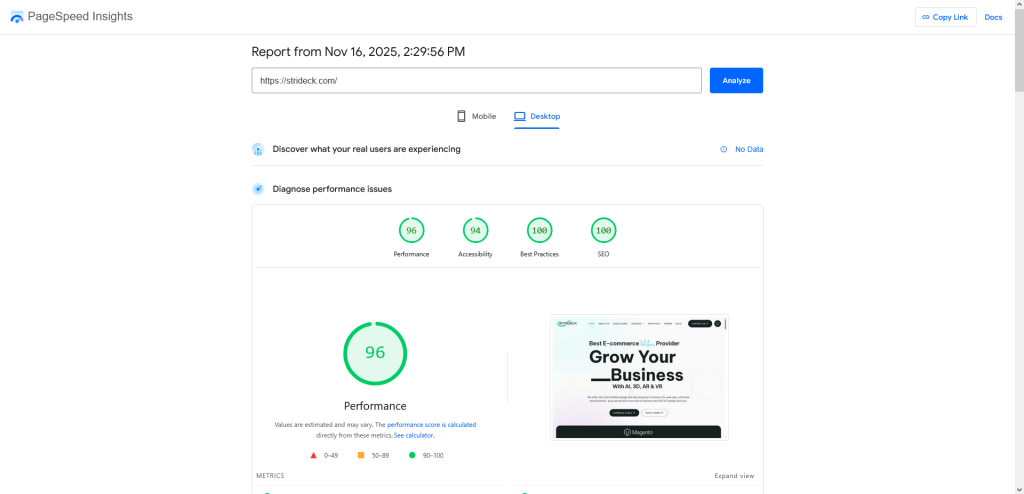
In order to maintain peak performance, it’s essential to use reliable tools that provide insights into how your website behaves under real-world conditions. Google PageSpeed Insights remains one of the most popular tools for analyzing Core Web Vitals and providing actionable recommendations. Lighthouse, integrated directly into Chrome DevTools, is useful for running audits and spotting areas for improvement in accessibility, performance, and best practices.
Advanced developers often use WebPageTest to analyze resource waterfalls and loading sequences, while GTmetrix offers both performance scoring and structural analysis. The Chrome User Experience Report (CrUX) provides real user data, which is more reflective of actual site performance than synthetic lab tests. Together, these tools form a powerful toolkit for diagnosing and improving your site’s performance.
Helpful Tools
- https://gtmetrix.com/
- https://tools.pingdom.com/
- https://pagespeed.web.dev/
- https://speedvitals.com/
- https://tools.keycdn.com/speed
Real-World Strategies for Better Performance
To enhance LCP, developers must prioritize loading the most important content first. This includes minimizing render-blocking resources like large CSS or JavaScript files and preloading key assets such as fonts or images. Hosting on high-speed servers and using Content Delivery Networks (CDNs) ensures faster content delivery, especially for global audiences.
Reducing CLS involves maintaining visual stability throughout the loading process. This means defining fixed dimensions for images, ads, and embeds to prevent layout shifts. Fonts should be loaded efficiently, avoiding flash of invisible text. Animation and UI transitions should be handled using techniques that avoid disrupting the user experience.
For better INP scores, websites must respond quickly to user input. Delays caused by heavy JavaScript execution or excessive third-party scripts can frustrate users and negatively impact this metric. Implementing asynchronous loading and optimizing the main thread can significantly reduce response times.
AI and Automation: The Future of Speed Optimization
In 2025, artificial intelligence is starting to play a key role in performance optimization. AI-driven tools can now automatically resize and compress images based on screen size, user behavior, or device type. Machine learning algorithms help prioritize which parts of a website to load first, delivering a faster perceived speed even before the full page is ready.
AI is also streamlining the development process by identifying slow code, flagging inefficient third-party scripts, and even suggesting performance improvements in real-time. Automation tools are being integrated directly into CI/CD pipelines, allowing teams to test performance continuously with every code deployment.
Why Optimization Is a Continuous Process
Performance optimization isn’t a one-time task. As websites evolve and new features are added, performance must be reevaluated regularly. Changes in Google’s ranking algorithm, updates to browser behavior, or shifting user expectations can all impact how well a website performs.
Keeping a site optimized means staying updated with the latest development standards, regularly auditing your site, and using automated tools to catch issues before they reach your users. It also means prioritizing performance as part of your development culture, not just as an afterthought.
Conclusion: Build for Speed, Build for Success
In 2025 and beyond, speed isn’t just a technical metric—it’s a measure of trust, professionalism, and user respect. Core Web Vitals provide a reliable framework for maintaining fast, responsive, and visually stable websites. When paired with mobile-first strategies and careful design, performance optimization becomes a competitive advantage.
Whether you’re an agency, developer, or business owner, staying ahead in a performance-driven digital landscape requires proactive effort. Start by measuring your Core Web Vitals, optimizing for mobile, balancing design with efficiency, and embracing automation wherever possible.
Fast-loading websites build better first impressions, rank higher in search, and most importantly—keep users coming back.
Thank you for giving your valuable time to explore it. Let’s connect with you for more updates!
Team Strideck
Our team specialize in delivering bespoke eCommerce and cloud-based solutions, helping businesses drive growth and achieve long-term success that meet every client’s unique needs.