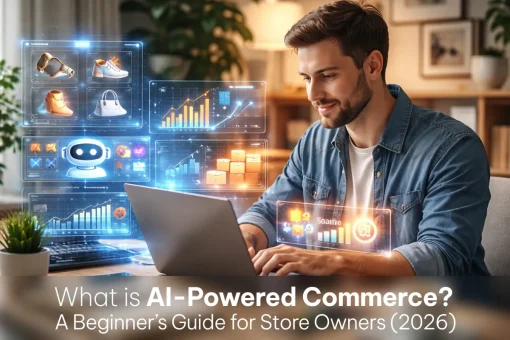


How AI Will Shape E-Commerce and Enhance Customer Experience in 2025


The future of e-commerce is rapidly evolving, and Artificial Intelligence (AI) is at the heart of this transformation. By 2025, AI will have integrated deeply into how businesses operate, how they engage with customers, and
how they optimize operations. In a world where personalized experiences and efficiency are increasingly important, AI will play a crucial role in shaping the e-commerce landscape. In this blog, we explore how AI will shape e-commerce and revolutionize the customer experience in the coming years.
AI: The Engine Behind Personalized Customer Experiences
One of the most significant ways AI will transform e-commerce is through the hyper-personalization of customer experiences. In today’s marketplace, customers expect businesses to understand their needs, preferences, and shopping behaviors. By 2025, AI will be key to meeting these expectations at an advanced level.
1. AI-Driven Personalization
AI enables businesses to analyze vast amounts of customer data, such as browsing behavior, past purchases, and social media activity, to create highly personalized shopping experiences. According to a study by Salesforce, “72% of customers expect companies to understand their needs and expectations”—and AI will ensure businesses meet this demand by offering tailored product recommendations, personalized marketing campaigns, and customized shopping experiences.
By 2025, AI will be capable of predicting what customers are likely to buy next, even before they know it themselves. For instance, AI can analyze data from wearable technology, online interactions, and shopping history to anticipate future purchases. This will not only drive sales but also enhance customer satisfaction, as each individual will feel uniquely understood and catered to by the brands they engage with.
2. Dynamic Content and Offers
AI will help businesses dynamically adjust their website content, pricing, and offers in real time. This kind of “real-time personalization” will allow e-commerce platforms to display different homepage layouts, product suggestions, and discounts based on individual customer data. For example, if a returning customer visits a website, AI could present an exclusive offer on an item they’ve shown interest in before, thereby increasing the likelihood of conversion.
Conversational AI and the Future of Customer Support
AI will revolutionize customer support by making it faster, more accurate, and more accessible. Conversational AI, powered by Natural Language Processing (NLP), will significantly improve how customers interact with e-commerce platforms.
1. Sophisticated AI Chatbots
While chatbots are already common in today’s e-commerce industry, by 2025, they will be vastly more intelligent and capable of holding natural, human-like conversations. These AI-driven chatbots will be able to solve more complex customer queries, offer personalized product recommendations, and even handle multiple languages fluently. As McKinsey notes, “AI-driven customer service interactions can reduce response times and increase customer satisfaction by 20% or more.”
These chatbots won’t just answer simple questions like “Where is my order?” but will also engage in complex problem-solving. Whether it’s helping a customer troubleshoot an issue, finding a hard-to-locate product, or providing shopping assistance, conversational AI will become the frontline of customer support.
2. 24/7 Multilingual Support
With e-commerce growing globally, language barriers can impede customer experience. AI will enable 24/7 multilingual customer support, allowing businesses to cater to customers in multiple languages simultaneously. AI-powered translation tools and chatbots will allow customers from all over the world to communicate with a business in their native language, enhancing inclusivity and breaking down barriers to entry for global markets.
Predictive Analytics and Proactive Customer Engagement
One of the most impactful ways AI will shape e-commerce by 2025 is through predictive analytics. By using AI to analyze customer behavior patterns and trends, businesses can predict future customer needs and make proactive decisions to enhance the customer journey.
1. Predicting Customer Intent
AI’s ability to predict what customers want before they even know it is a game-changer. For example, if a customer is repeatedly browsing for a particular item but hasn’t made a purchase, AI can step in with a personalized promotion or reminder. This use of predictive analytics will lead to improved customer retention and higher conversion rates.
A quote from Bernard Marr, a leading expert on AI, captures this well: “AI will enable brands to anticipate customers’ needs even before they arise, providing a level of service that feels intuitive and deeply personalized.” By understanding customer intent, businesses can engage with their customers in more meaningful and timely ways, offering recommendations, promotions, or support just when they need it.
2. Optimized Inventory Management
Inventory management is another area where predictive analytics will play a vital role. By 2025, AI will enable businesses to predict product demand more accurately, ensuring that they have the right products in stock at the right time. This not only reduces waste and overstock issues but also ensures that customers aren’t met with out-of-stock messages when trying to make a purchase. AI-powered inventory management systems will keep businesses one step ahead of customer demand, improving the overall shopping experience.
The Rise of Visual and Voice Search
As technology advances, visual and voice search will become mainstream in e-commerce by 2025. These intuitive search methods will change how customers discover products, providing a more seamless and efficient shopping experience.
1. Visual Search for Product Discovery
AI-driven visual search tools will allow customers to upload images and find visually similar products. For instance, a customer could upload a picture of a dress they like, and AI will search through an e-commerce platform’s database to present options that match or closely resemble the design. This visual search capability will transform product discovery, particularly in fashion, home decor, and beauty, where customers often look for items that match a specific style or aesthetic.
2. Voice Search Integration
Voice assistants like Alexa, Siri, and Google Assistant are already widely used, and their integration into e-commerce will grow by 2025. AI will allow customers to use voice commands to search for products, compare prices, and even complete transactions without ever touching a screen. According to Gartner, “By 2025, 30% of all e-commerce transactions will be completed via voice assistants.”
This shift toward voice commerce will not only improve convenience but also offer a more inclusive shopping experience for customers with disabilities or those who prefer hands-free shopping.
AI and Supply Chain Optimization
AI will also play a critical role in streamlining supply chain and logistics operations. By improving efficiency in these areas, businesses can offer faster shipping times and more reliable deliveries, enhancing the overall customer experience.
1. Automated Warehousing and Fulfillment
AI will drive warehouse automation, reducing the need for human intervention in the storage, picking, and packing of products. Robotic systems powered by AI will optimize space utilization in warehouses and ensure quicker, more accurate order fulfillment. With same-day or even one-hour delivery windows becoming the norm by 2025, businesses will rely on AI to meet customer expectations for speed.
2. Smart Delivery Systems
AI will also enhance last-mile delivery, optimizing routes for delivery drivers or autonomous vehicles to ensure faster and more efficient deliveries. AI-powered logistics platforms will predict the best delivery times and methods based on customer location, traffic conditions, and weather. This will result in more timely deliveries and improved customer satisfaction.
AI and Ethical Considerations
While AI offers tremendous benefits, there are also important ethical considerations that businesses must address. Transparency and fairness in AI-driven decision-making will be critical to ensuring that customers trust AI-driven systems.
1. Data Privacy and Security
With AI systems analyzing vast amounts of personal data to provide personalized experiences, businesses must prioritize data privacy and security. Customers will demand more transparency about how their data is being used. Businesses must comply with data protection regulations, such as GDPR, and ensure they are safeguarding customer information. As Sundar Pichai, CEO of Google, puts it, “AI is one of the most profound things we’re working on as humanity, and we must ensure it’s developed res3
2. AI and Bias
Another important consideration is ensuring that AI systems are free from bias. AI algorithms are only as good as the data they are trained on, and if this data reflects existing biases, AI can unintentionally perpetuate these issues. Businesses must invest in developing fair, unbiased AI models that treat all customers equitably, regardless of their background or demographic characteristics.
Conclusion: The AI-Driven Future of E-Commerce
By 2025, AI will have fundamentally reshaped the e-commerce landscape, transforming how businesses engage with customers and deliver value. From hyper-personalization and conversational AI to predictive analytics, visual search, and supply chain optimization, AI will make the shopping experience faster, more intuitive, and deeply personalized. However, as businesses embrace the benefits of AI, they must also navigate the ethical challenges surrounding data privacy, transparency, and fairness to ensure a future where both technology and humanity thrive.
As we move toward this AI-driven future, one thing is clear: “AI will not just change how businesses operate; it will redefine the very nature of customer experience.”
Team Strideck
Our team specialize in delivering bespoke eCommerce and cloud-based solutions, helping businesses drive growth and achieve long-term success that meet every client’s unique needs.